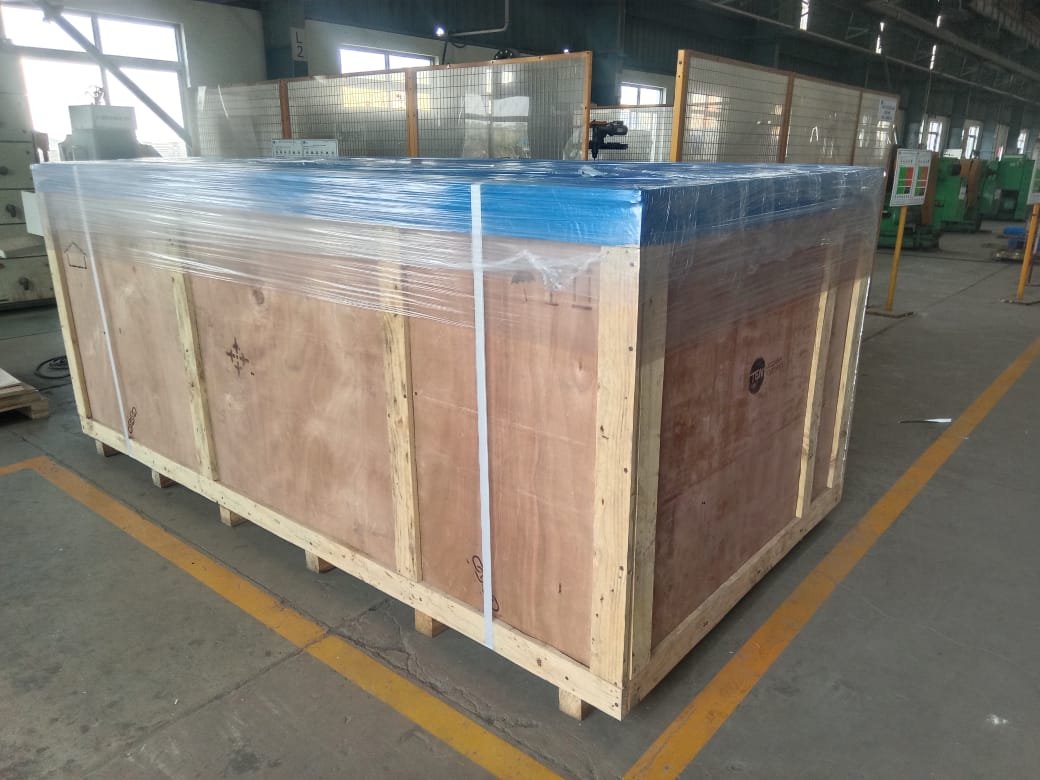
Understanding ISPM-15: The Global Standard for Wood Packaging
The International Standards for Phytosanitary Measures No. 15 (ISPM-15) was established by the International Plant Protection Convention (IPPC) to prevent the international transport and spread of disease and insects that could negatively affect plants or ecosystems. For manufacturing exporters in Vadodara, Gujarat, and across India, non-compliance with ISPM-15 is the single most common cause of cargo rejection, quarantine hold, or forced re-export at destination ports in North America, Europe, China, and Australia.
ISPM-15 governs all raw wood packaging material with a thickness greater than 6 mm, including timber crates, wooden pallets, dunnage, cable drums, and packing blocks.
Heat Treatment (HT) vs. Methyl Bromide (MB) Fumigation in India
Under Indian Plant Quarantine regulations and international directives, two treatment pathways exist:
- Heat Treatment (HT): The wood core temperature must reach a minimum of 56°C (133°F) for at least 30 continuous minutes throughout the entire profile of the timber. HT is chemically inert, leaves no toxic residues, and is the universally accepted standard across the European Union, UK, US, and Japan. Pankaj Packaging strictly prioritizes HT certified timber.
- Methyl Bromide (MB) Fumigation: Gaseous chemical treatment over a 24-hour cycle. While historically common in India, MB is an ozone-depleting substance under the Montreal Protocol and is strictly banned or restricted for import into the European Union (Regulation EC 2037/2000) and numerous other developed markets.
The Plywood & Engineered Wood Exemption Advantage
A critical operational insight for Indian machinery exporters: Plywood, particle board, oriented strand board (OSB), and hardboard are fully exempt from ISPM-15 heat treatment and fumigation requirements. Because plywood is manufactured using extreme heat, industrial adhesives, and compressive pressure, all biological pathogens and wood-boring pests are eliminated during production.
By engineering custom export boxes using high-grade 15mm–18mm marine/commercial plywood paired with HT-treated internal timber framing, manufacturers eliminate port quarantine bottlenecks while gaining superior dimensional stability and impact resistance compared to rough-sawn unseasoned pine.
The Mandatory IPPC Stencil Mark
Every compliant wood packaging unit must carry the official, indelible IPPC stamp on at least two opposite exterior faces:
- IPPC Symbol: The wheat sheaf logo on the left.
- Country Code:
INfor India. - State / Region & Facility Code: A unique numerical code identifying the accredited treatment provider.
- Treatment Type:
HT(Heat Treated) orMB(Methyl Bromide). - DB (Debarked): Confirming all bark was removed prior to heat treatment.
Frequently Asked Technical Questions
Common engineering and customs clearance questions answered by our Ranoli packaging desk.
Are plywood packaging boxes required to have an ISPM-15 stamp?
Pure plywood and manufactured wood-based composites do not legally require ISPM-15 treatment or stamps because manufacturing heat eliminates pests. However, if unmanufactured solid timber is used for the skid base, internal saddles, or corner cleats, those solid timber members must be heat treated and stamped.
What happens if cargo arrives at destination port without compliant ISPM-15 stamps?
Destination customs and biosecurity authorities will issue an emergency phytosanitary action order: the cargo may be refused entry, placed into costly bonded quarantine fumigation, or ordered to be re-exported at the shipper's expense.
How does Pankaj Packaging ensure 100% export clearance compliance?
All timber used in our Ranoli, Vadodara manufacturing plant is sourced exclusively from accredited treatment chambers, verified with moisture content below 18%, and stamped with official registered IPPC marks with traceable treatment certificates provided with every dispatch.
Engineering Compliance Guarantee
All timber packaging, steel frames, and vacuum hermetic seals manufactured by Pankaj Packaging Services adhere strictly to international standards including ISPM-15, DIN 55473, and IS 2062 Grade A structural fabrication. Traceable treatment records are supplied with all dispatches.